
For sports parents · Braces guide
What mouthguard works for a kid with braces?
Published
A kid with braces needs a mouthguard that covers the teeth without gripping the brackets, and that still fits as the teeth move. A standard boil-and-bite molded hard over brackets fails both tests. Orthodontic guards, custom guards rebuilt after adjustments, and NeuroGuard+, which sits on the lower teeth, can all work. Ask your orthodontist which arch to protect.


- Lower teethWhere NeuroGuard+ sits, away from brackets on the upper teeth.
- NFHS approvedNG+ is cleared for high school competition.
- $49.97The price of one NG+, case included.
What to watch out for
What problems do braces cause with a mouthguard?
Braces cause three problems with a mouthguard: the old one stops fitting, a new one can grab the brackets, and the fit keeps changing all season. The day your kid gets braces, the guard that fit last week may not seat over the brackets at all. Kids notice fast. A guard that rubs or pops loose ends up in a sock, and a guard in a sock protects nothing.
The old guard won't seat
Brackets and wires add bulk to every tooth they sit on. A guard molded before braces now rocks, rubs, or won't go in.
Hot plastic grabs brackets
Boil-and-bite plastic molded hard around brackets can lock onto them. Pulling it out then tugs on the wire.
The teeth keep moving
Every orthodontist adjustment shifts the teeth a little. A tight fit in August can be a wrong fit by October.
What it costs to skip this
A guard that doesn't fit gets spit out, and a hit with nothing in their mouth puts the brackets straight into the lips and cheeks. A bracket knocked loose also means an extra orthodontist visit in the middle of the season. Fix the fit before the first practice, then check it after every adjustment.
Boil-and-bite, custom, or orthodontic
Which type of mouthguard works best with braces?
The type that works best with braces depends on which teeth have brackets and whether your kid will keep the guard in. The table lines up the four kinds parents choose between: where each sits, how it treats brackets, how it copes with teeth that move, and when it's the right pick. Orthodontic guards from brands like Shock Doctor are built to sit over upper brackets. OPRO and most drugstore guards are boil-and-bite, so treat them like the first row unless the package says it's made for braces.
| Type | Where it sits | Over brackets | As teeth move | Talking and breathing | Pick it when |
|---|---|---|---|---|---|
| Standard boil-and-bite | Upper teeth | Hot plastic can mold around brackets and lock onto them | Loosens or binds after adjustments; remold or replace | Often bulky, so kids pull it out | Braces are off, or the orthodontist okays a light mold |
| Orthodontic guard | Upper teeth, over the brackets | Soft channel covers brackets, usually with little or no molding | Leaves room for teeth to shift | Varies by model | You want the upper brackets and lips covered |
| Custom lab guard | Upper teeth, from an impression | Made around the current braces | Needs remaking as the teeth move | Usually thinner than boil-and-bite | Your orthodontist or dentist makes and refits it |
| NeuroGuard+ | Lower teeth | Stays off upper brackets; ask your orthodontist first if there are lower brackets | Check the fit after every adjustment | Talk, breathe, and drink without taking it out | Your kid won't keep a bulky upper guard in |
Rules differ by sport. Check your league's mouthguard rule before you buy any of these.
Why the bottom matters
Why does a lower-teeth mouthguard help a kid with braces?
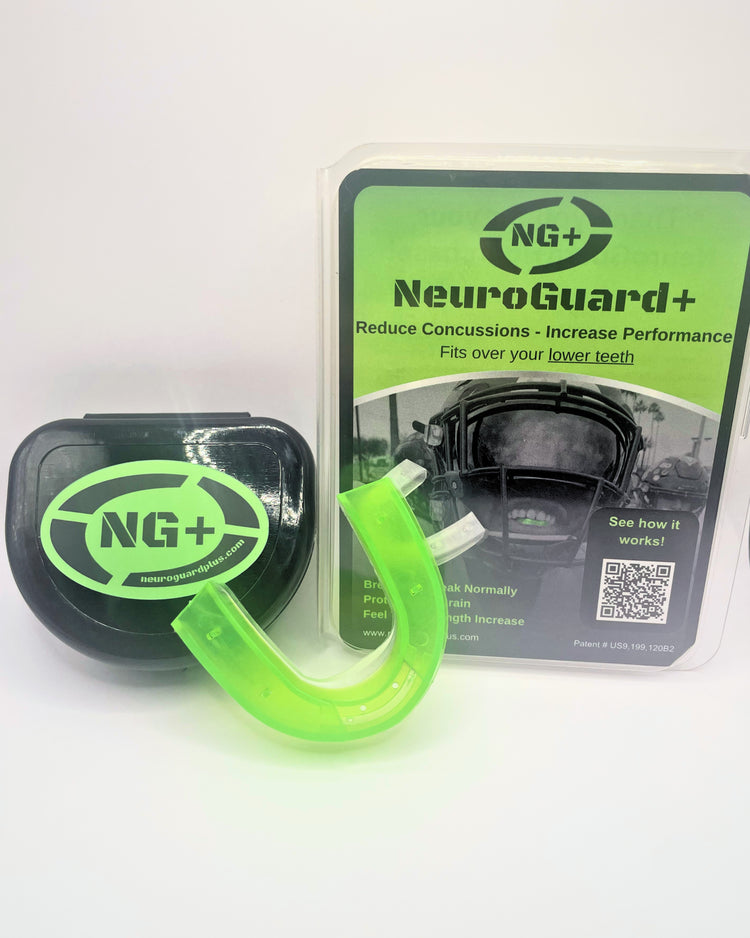
A lower-teeth mouthguard helps because it keeps the guard off the upper brackets entirely. NeuroGuard+ sits on the lower teeth and holds the jaw in its physiologic position. Nothing molds around the upper brackets, and nothing presses on the upper wire when your kid pulls it out between drills.
The bigger win is that kids keep it in. The old mouthguard is a piece of plastic across the upper teeth that makes it hard to talk and breathe, so it spends the game in a sock. NG+ lets your kid talk, breathe, drink, and call plays without breaking rhythm. The safest mouthguard is the one that stays in their mouth.
NeuroGuard+ was built to be worn through orthodontic treatment. It's the same guard for football, lacrosse, wrestling, hockey, and the rest of the sports on your kid's calendar, so a multi-sport athlete with braces needs one fit, not three. Molding takes warm water at home; the NG+ fitting guide walks through each step.
When a different guard is the better pick
If your orthodontist wants the upper brackets covered, an orthodontic guard that sits over the upper teeth does that, and NG+ doesn't. If your kid has brackets on the lower teeth, show NG+ to the orthodontist before you mold it. A lab guard from your orthodontist also makes sense when the braces are nearly done and the teeth have stopped moving.
Your teeth can be fixed. Your brain can't.
Braces protect the smile you're paying for. The mouthguard has to protect everything above it, and it only works when it's in.
The parent checklist
What should you check before buying a mouthguard for braces?
Check six things before you buy: your orthodontist's okay, which teeth have brackets, your sport's rule, whether your kid can talk in it, how it molds, and when you'll refit it. The list works for any brand, NeuroGuard+ included. Take it to the next orthodontist visit and go down it together.
- Ask the orthodontistTell them the sport and show them the guard. They know how your kid's braces are set up.
- Know which teeth have bracketsUpper only, lower only, or both. That decides whether an upper or lower guard fits better.
- Check the sport's ruleHigh school leagues set mouthguard rules by sport. NG+ is NFHS approved.
- Test talking and breathingHave your kid say a full sentence with it in. If they can't, it'll come out at practice.
- Mold gently, never hardDon't bite down hard into hot plastic over brackets. Follow the brand's fitting steps.
- Refit after every adjustmentCheck the fit after each orthodontist visit, and replace it when it's loose, chewed, or the braces come off.
By age
How does the right braces mouthguard change with age?
The right braces mouthguard changes with age because the braces, the sports, and the rules all change. A younger kid in early orthodontic treatment has different gear in their mouth than a high school junior counting down to getting braces off. Here's what to watch at each stage.

Elementary school
Early treatment, first contact sports
Some kids start with an expander or partial braces. Ask the orthodontist which teeth need covering before you pick a guard.
Fit is the whole game at this age. If it's uncomfortable, a young kid won't wear it, so let them test talking in it before the first practice.
Middle school
Full braces, harder hits
This is when many kids get full braces and move into tackle football, lacrosse, and wrestling. The old guard from last season likely won't fit.
Teeth move fast in this stage. Check the fit after every adjustment and keep a spare; the NG+ DoublePack covers that.
High school
League rules, braces coming off
Mouthguard rules get stricter. NG+ is NFHS approved for high school competition; check your sport's rule on the mouthguard rules by sport page.
If braces come off mid-season, the teeth sit in a new position. Refit or replace the guard that week.
Questions parents ask
Braces and mouthguards: questions parents ask
These are the questions parents ask most about mouthguards and braces, answered straight. For anything about NeuroGuard+ not covered here, the NG+ FAQ page has more.
Can my kid wear NeuroGuard+ with braces?
Yes. NeuroGuard+ sits on the lower teeth, so it stays off brackets on the upper teeth, and the company designed it to be worn through orthodontic treatment. If your kid has brackets on the lower teeth too, show the guard to your orthodontist before you mold it.
Can you use a regular boil-and-bite mouthguard with braces?
Only with care. Hot plastic molded hard around brackets can lock onto them and pull on the wire when your kid takes it out, and the fit goes wrong as the teeth move. Ask your orthodontist before molding any boil-and-bite over braces.
How often should a kid with braces replace their mouthguard?
Check the fit after every orthodontist adjustment and replace the guard when it feels loose, rubs, or is chewed through. Plan on a new guard when the braces come off, because the teeth sit in a new position.
Is NeuroGuard+ allowed in high school sports?
NeuroGuard+ is NFHS approved for high school competition. Rules still differ by sport and league, so check your sport's mouthguard rule before the season starts.
Is a $50 mouthguard worth it over a $15 one for a kid with braces?
A $15 guard is fine if it fits over the braces and your kid keeps it in. NeuroGuard+ costs $49.97, and what you pay for is a lower-teeth fit your kid can talk and breathe through, so it stays in the whole game.
For parents
You can't be on the field to protect them. This is the next best thing.
One guard on the lower teeth, off the upper brackets, and easy enough to talk through that it stays in all season.
Give them the protection · $49.97